Home-made Hummus (35p).

Humous, according to Wikipedia, is an Arabic dish originating in the near east – the earliest recorded recipe being from Cairo in the 13th century. The main ingredient is chickpees and it should include tahini (roasted, puree seseme kernals), although that would add too much to the cost for purposes of this blog. My version, which is a filling snack rather than a meal, is as follows …

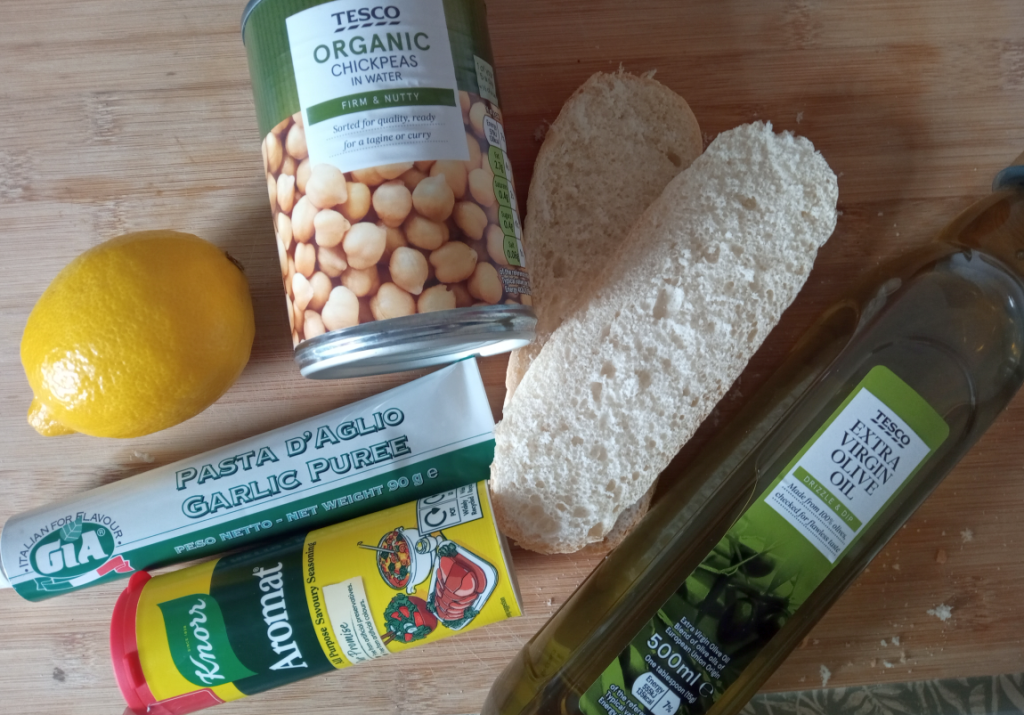
  • Tin of chickpeas.
  • Juice of 1 lemon or a couple of limes.
  • Good splash of olive oil, extra virgin if you’ve got it.
  • Garlic puree (or crushed garlic clove), a heaped teaspoon or less depending on taste.
  • Several pinches of all-purpose seasoning.
  • Water.
  • Some bread or crackers to put it on.

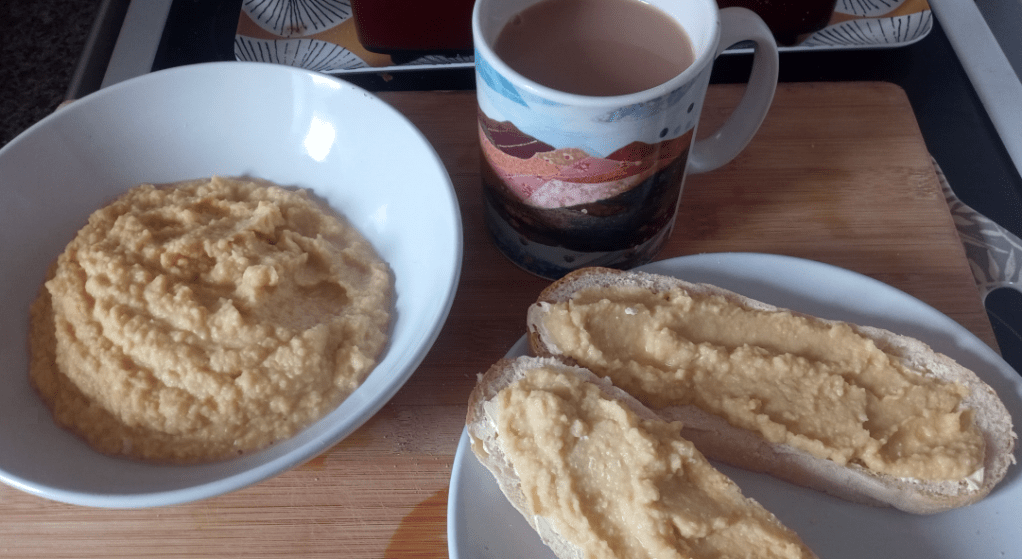
I used a blender to mix everything together, but with a bit of elbow grease and a large pestle and mortar (end of a rolling pin and a deep bowl) would be as good. Rinse the chickpeas and put them in the blender, then simply add everything else. Whizz it all up, adding water until it is like heavy wallpaper paste – don’t over-do the water and make it runny.

Traditionally served as a dip with raw vegetables and/or bread. My version is to simply spread it on top of some bread and butter. It would be nice with a couple of slices of beef tomatoes laid on top, but that would add to the cost, of course.

A difficult one to price up, but I think – as a light meal with a cup of Earl Grey Tea – come to about 35p a serving.


Lent Potato Salad (39p)

greece-flag-17A hot (or cold) potato salad inspired by a recipe on Giota Nikolau’s ′Grandma’s Food′ blog, a site which has many wonderful recipes. It is all written in Greek, but with help from Google translate and the wonderful photos on the site, her recipes and ideas can be followed.
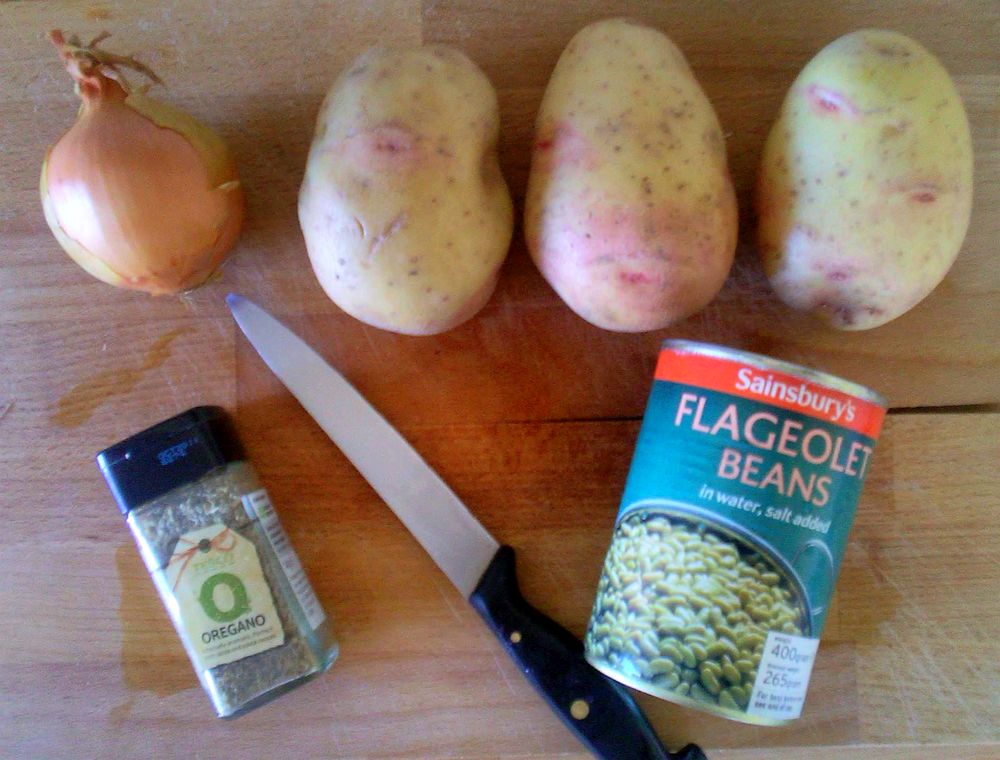
It is still Lent in the Greek Orthodox church calendar, their Easter day being Sunday 19 April, making this their Orthodox Holy Week and a time of fasting – no meat, fish, wine, oil, wine, dairy or eggs, so my version of the recipe almost meets the criteria, bar the splash of oil for frying and knob butter for flavour.

Ingredients (serves four):

  • Three baking-size potatoes.
  • One onion, red or white.
  • Dried oregano.
  • Tin of beans – I used a tin of Flageolet beans that I found at the back of the cupboard, but would normally use the cheapest kidney beans, or indeed anything suitable hanging around in the cupboard or fridge that needs using up – some fresh green or string beans, for example.
  • Salted butter.

lent-potato-salad-202004141800-1

Method:

  • Slice the onion up and fry until soft and translucent, then put it aside. Don’t over-fry the onion, keep it a little al dente.
  • Peel and chop the potatoes into inch-sized lumps, then simmer them in a saucepan for 15-20 minutes until soft. Keep a close eye on them so they don’t dissolve and you end up with a watery potato soup.
  • While they’re simmering, empty the can of beans, rinsing them under the cold tap, and add them to the simmering potatoes half way through.
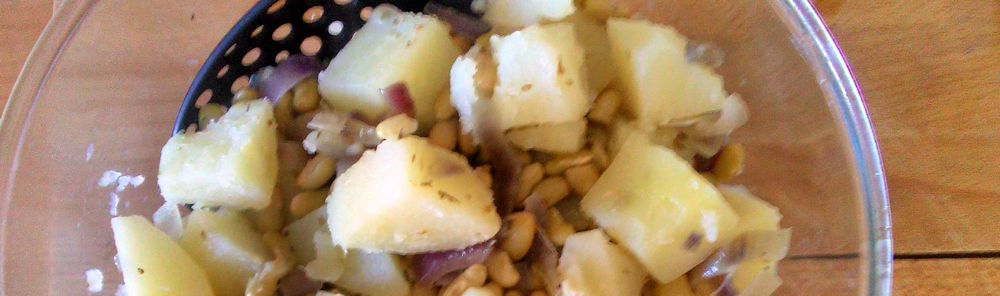
  • When the potatoes are ready, pour off the water and transfer to a bowl, sprinkling in a pinch of dried oregano.

lent-potato-salad-202004141800-2

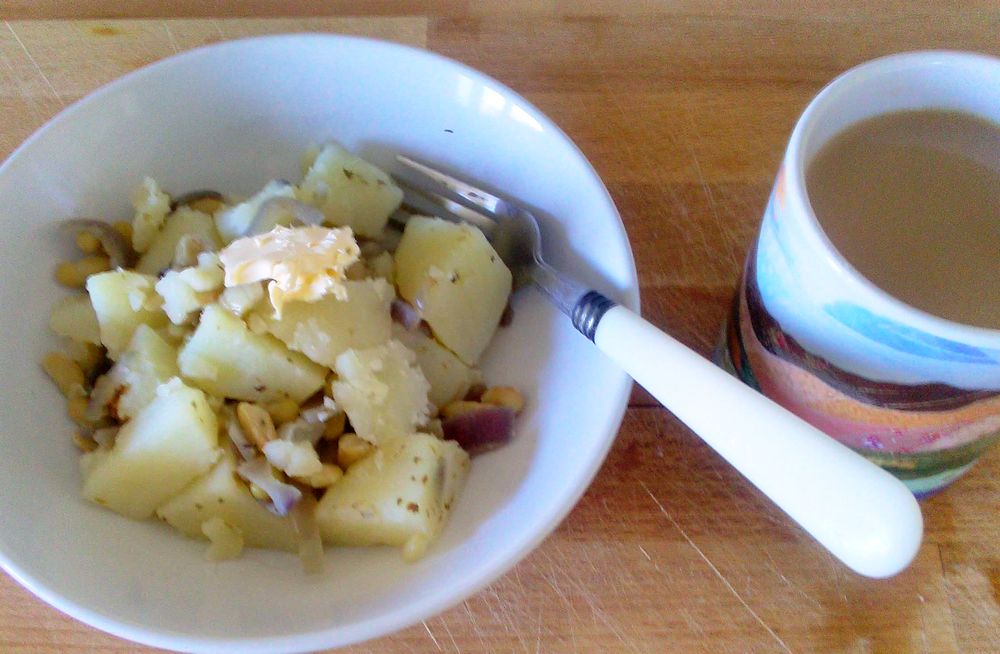
And that’s it. Makes about four portions. Serve hot in a bowl with a good knob of  butter on top, or can be eaten cold.

lent-potato-salad-202004141800-3

Estimating electricity use and washing up costs, and with a mug of Earl Grey tea, that’s a meal for about 39p.


Chicken Yassa (£1.50)

Yassa is a spicy chicken dish from Senegal, made with onions, spices and seasoning. In spite of the large quantity of onion, it doesn’t taste oniony at all. More complex versions of this recipe exist, adding different spices, vinegar or other ingredients. I deliberately kept mine as simple a possible.

I went a bit over-the top quantity-wise with this, making enough to feed a family of six. For just one or two people, divide the quantities below by three.

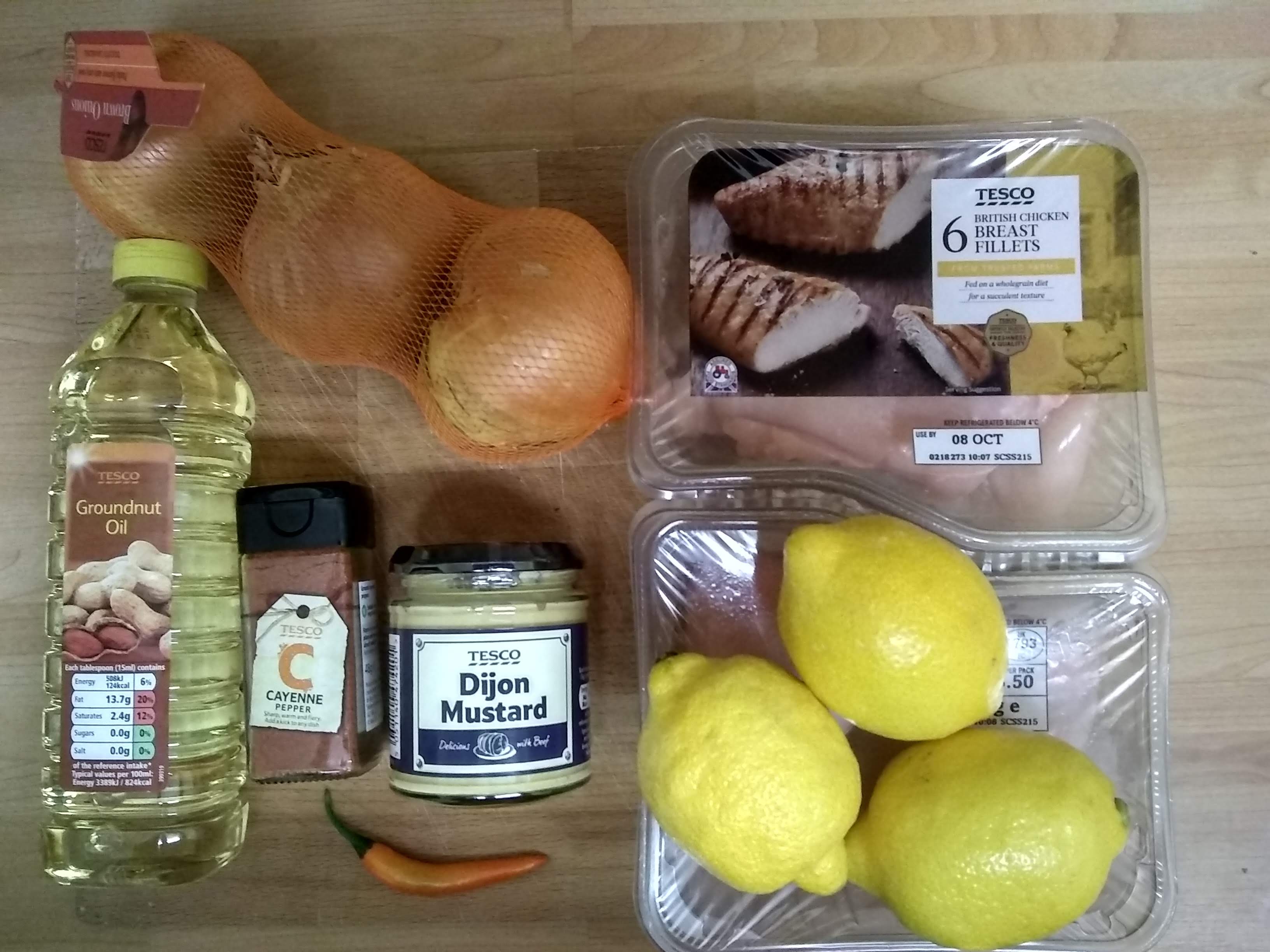
greeds

Ingredients (serves six)

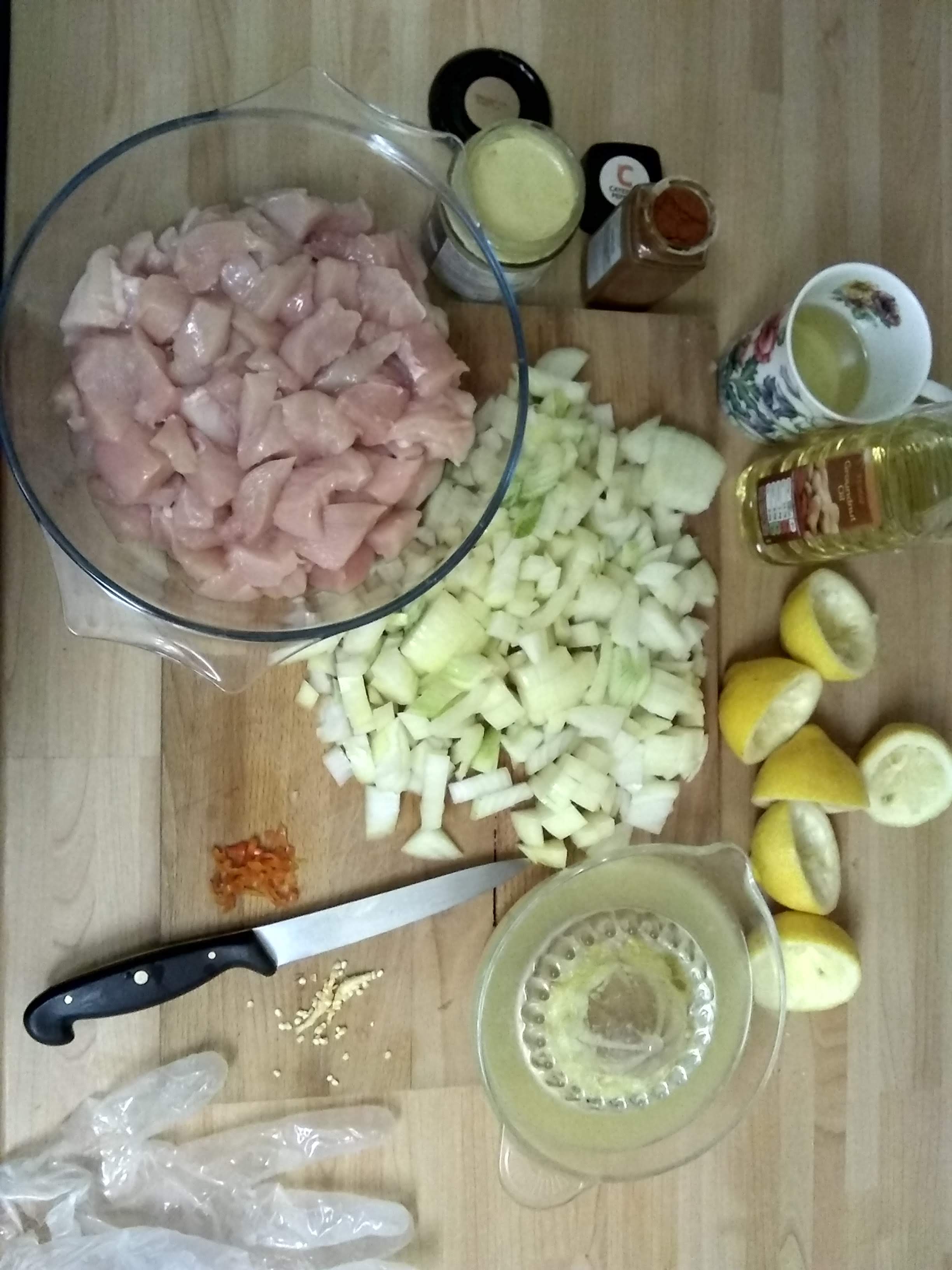
  • 6 breast fillets (or equivalent amount of meat).
  • Three onions, red or green, finely chopped or sliced.
  • Juice of three lemons.
  • 1 cup (½-a-mug) of ground-nut (peanut) or olive oil.
  • 1 well-heaped desert spoon of Dijon mustard.
  • 1 heaped teaspoon of cayenne pepper.
  • 1 Habanero chili, seeds removed, finely chopped (optional) – or some suitable alternative like powdered or bottled hot chili.
  • Soy sauce (optional).

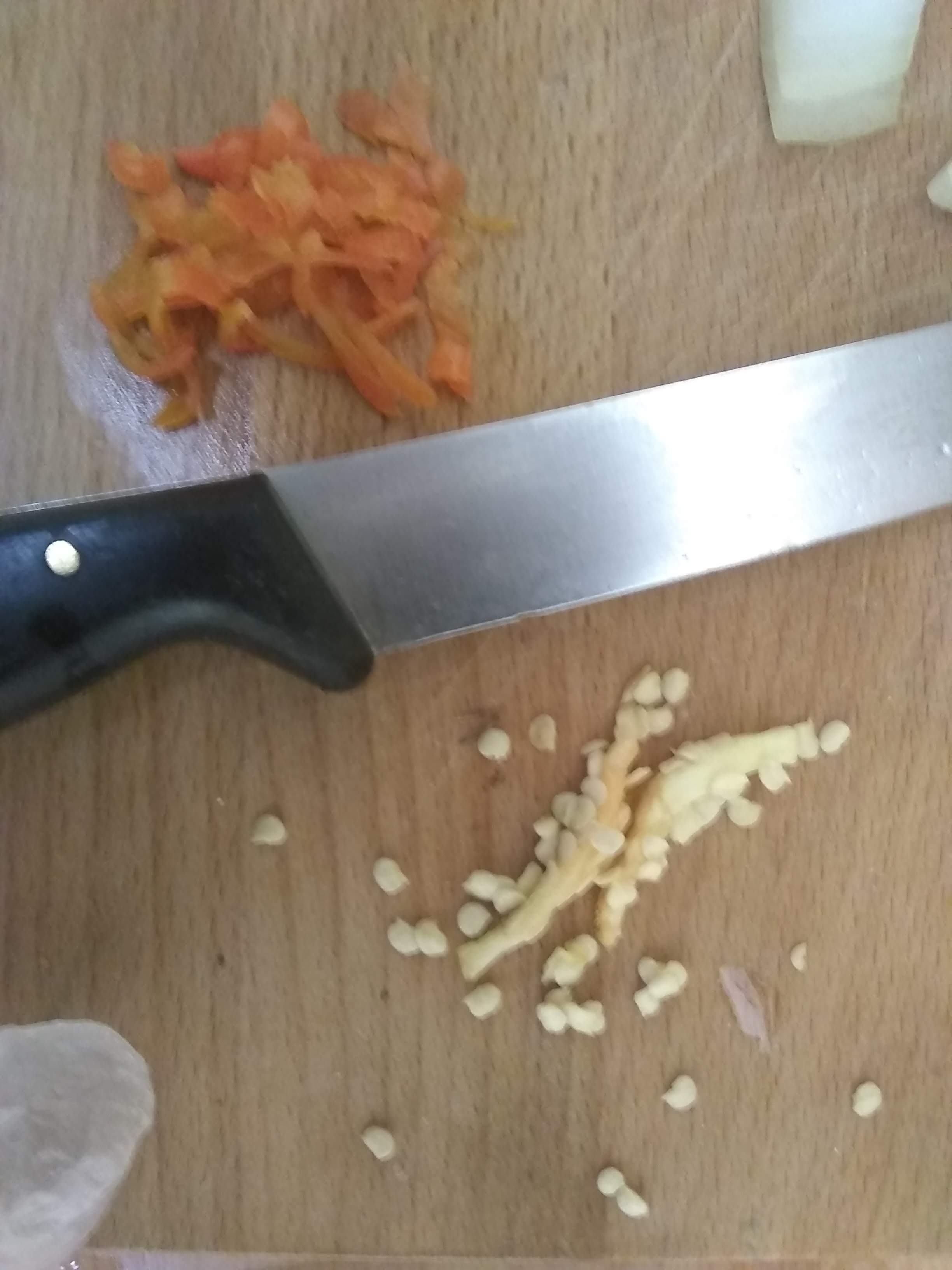
WEAR DISPOSABLE GLOVES when de-seeding and fine-chopping the Habanero chili. It is very hot, and might make your fingers sting. Absolutely do not put your fingers anywhere near your eyes, in your ear, up your nose or anywhere else tender while chopping. You’ll soon regret it. Wondering just how hot these raw chilies were, I cut one in half and licked the end. It was like licking the end of a cattle-prod. The finished dish is not particularly hot, just has that extra tang. but if you’re really not a fan of chili, leave it out, and add soy sauce for some extra flavour instead.

chili

Method

Chop the chicken into small chunks or thin slices and put this in a large mixing bowl. To the bowl add the onion, lemon juice, oil, mustard, cayenne pepper and chili, and stir everything together. I also added a couple of tablespoons of soy sauce, although this is not strictly necessary and depends on personal taste.

chopped

This needs to marinate for half-a-day, so best to do the preparation in the evening and leave it in the fridge overnight, ready to cook the next day.

The customary way to cook this is to fry it on a hot plate – a hot frying pan will do just as well – until the onion is well softened and caramelised and the chicken just starting to brown.

cooking

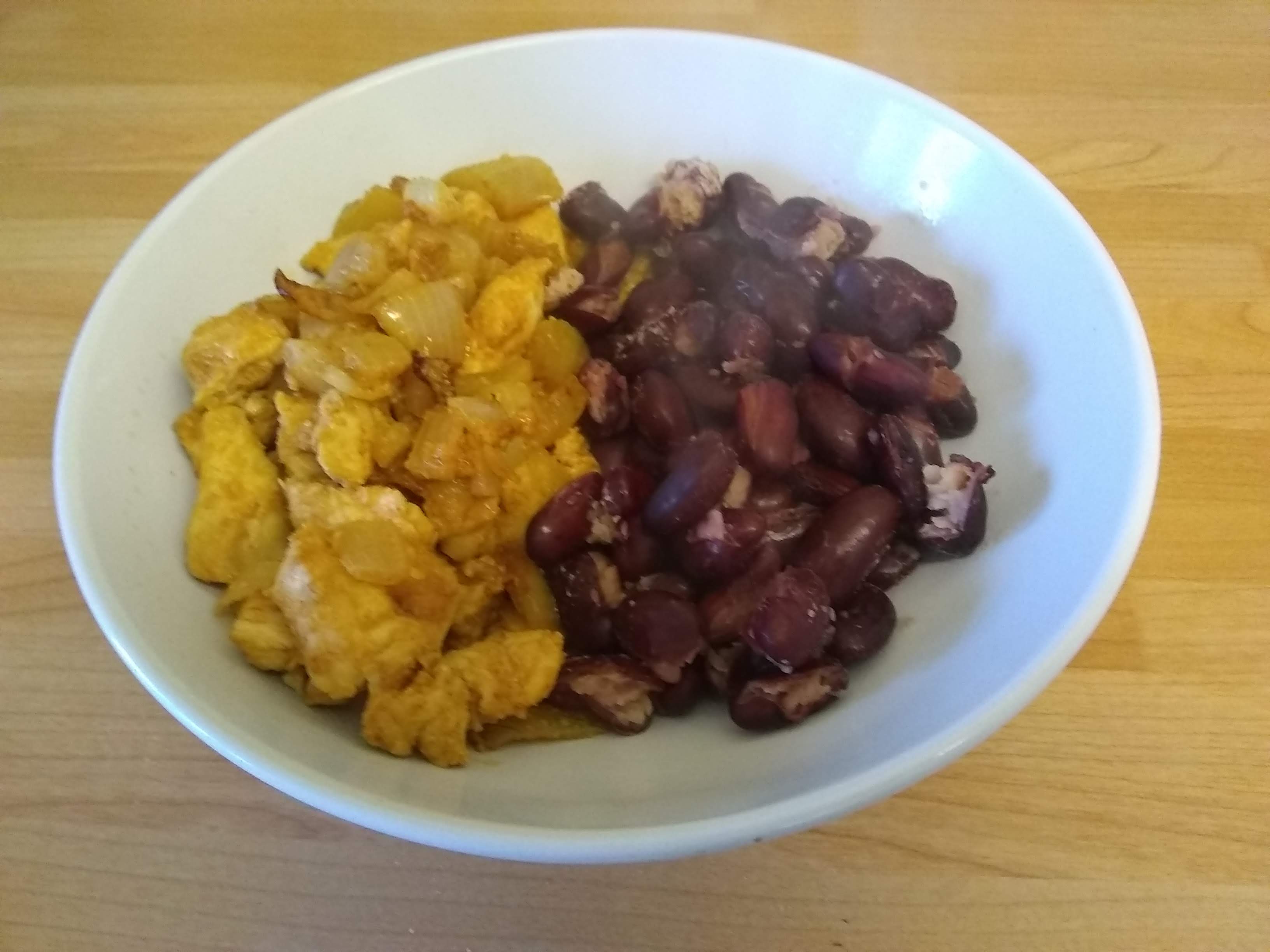
Serve immediately with mashed potato, some yam or sweet potato mash, rice, or anything really. I microwaved a can of red kidney beans (rinse the goo off them first and put in a ceramic dish to microwave) which went very well. It would also go well with the flatbreads from my previous post.

finished

Can be kept in the fridge or even frozen, I suppose, but this is a food best served freshly cooked. Everything considered, come out at about £1.50 a meal.


Flatbreads – 5p each (Cooking on a Bootstrap)

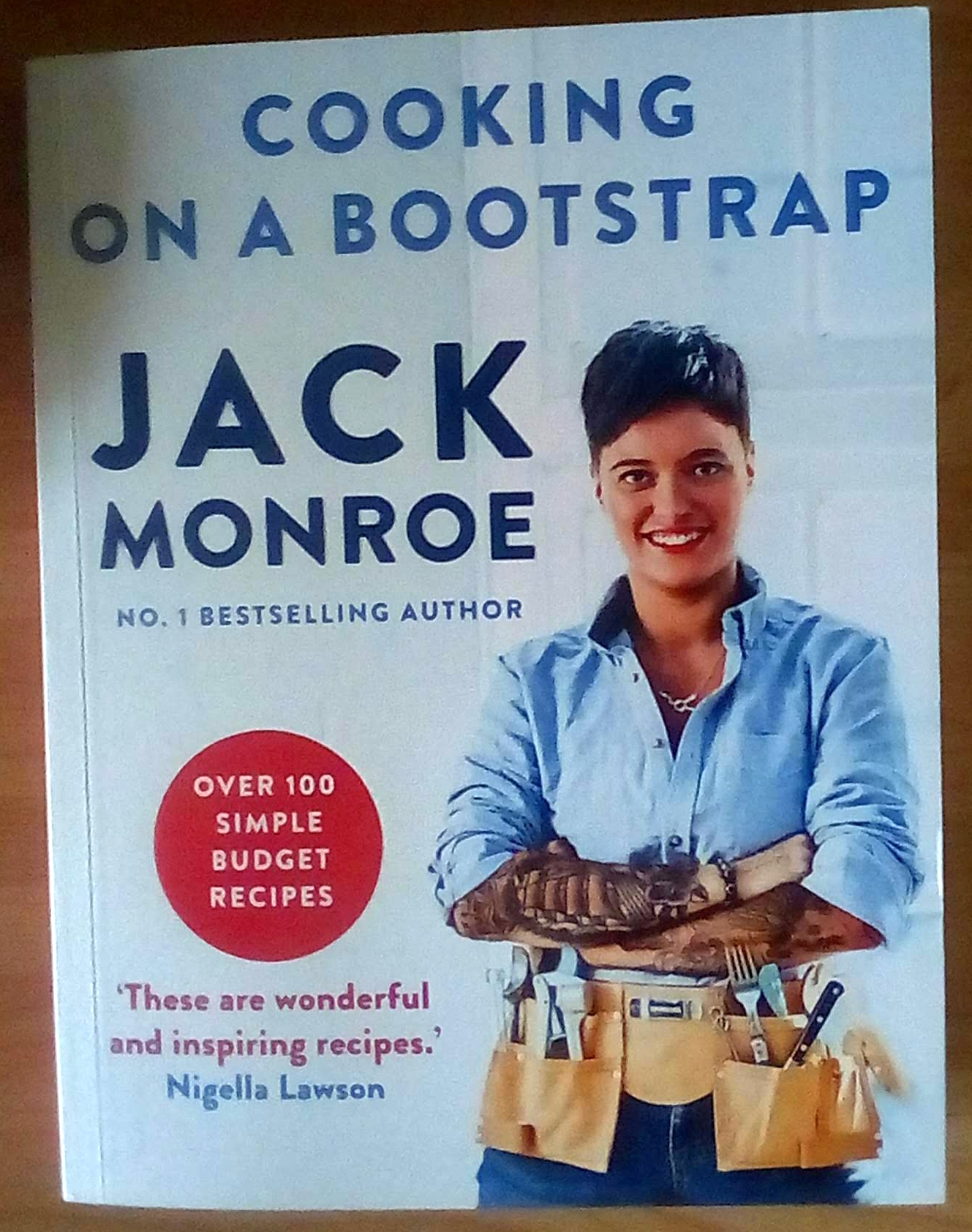
Cooking on a Bootstrap‘s recipe no. 2 is a beautifully simple recipe which makes eight flatbreads in well under an hour. So far have used them to dip in soup, with a bit of jam inside and as mini pizzas. All in (including electricity and washing-up costs), they come to 5p each.

DSC_0155.JPG

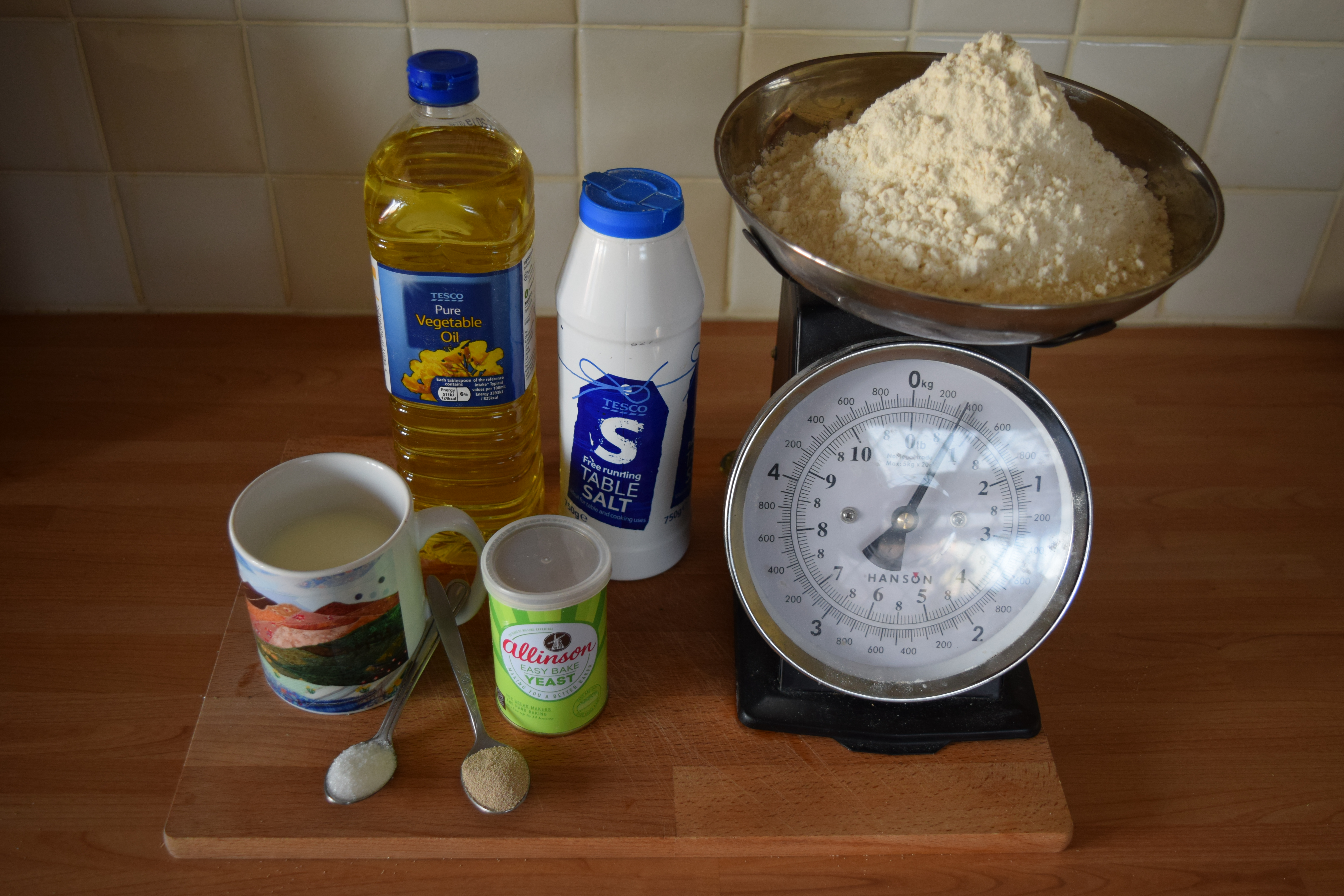
  • 3 cups of flour, 1 cup of milk, teaspoon each of dried yeast, sugar and oil, and a pinch of salt.

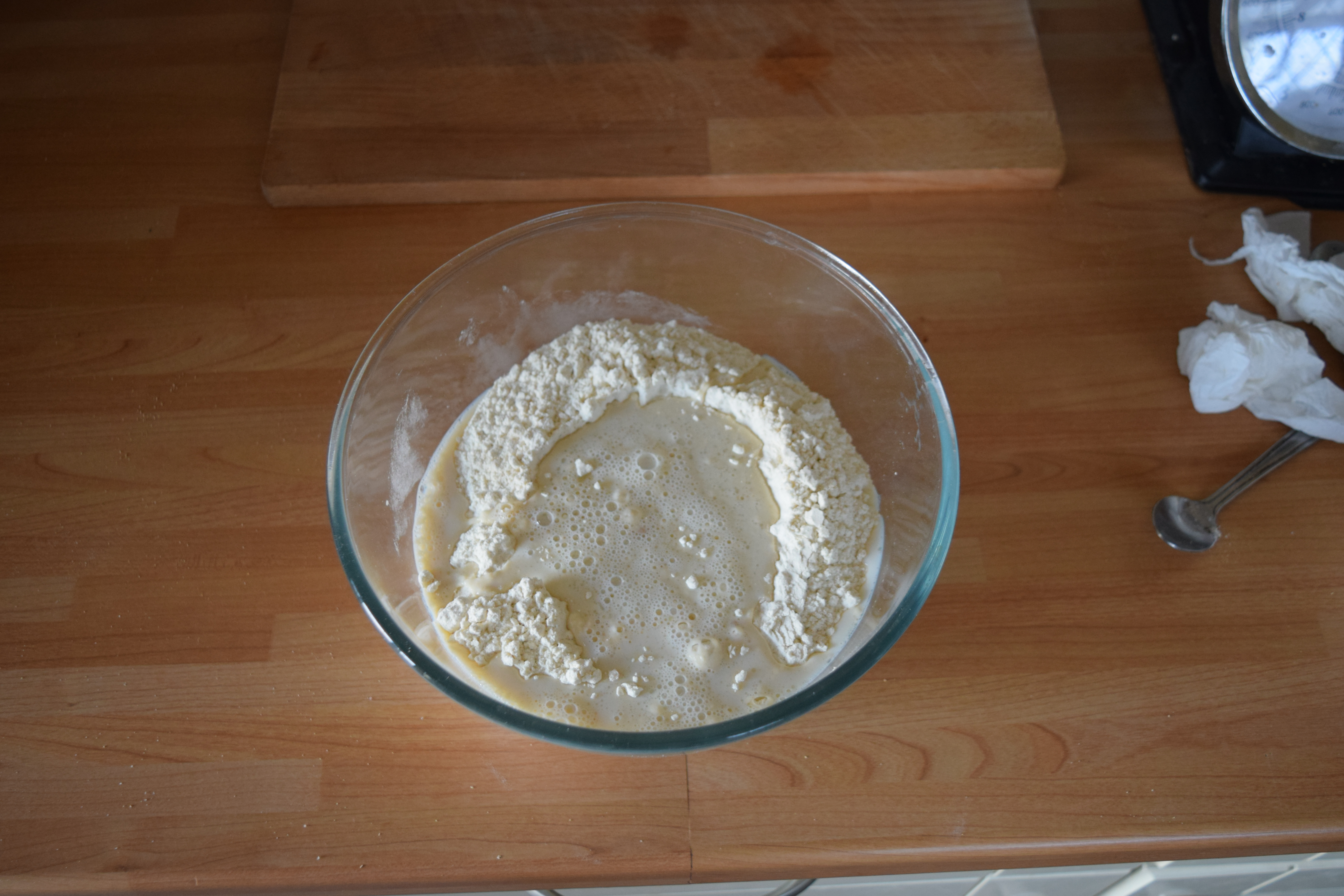
First, warm the milk slightly in the microwave and stir in the yeast and sugar. Put the flour in a marge bowl with the salt, pour the milk mixture in and stir it all together to make a dough.

DSC_0158

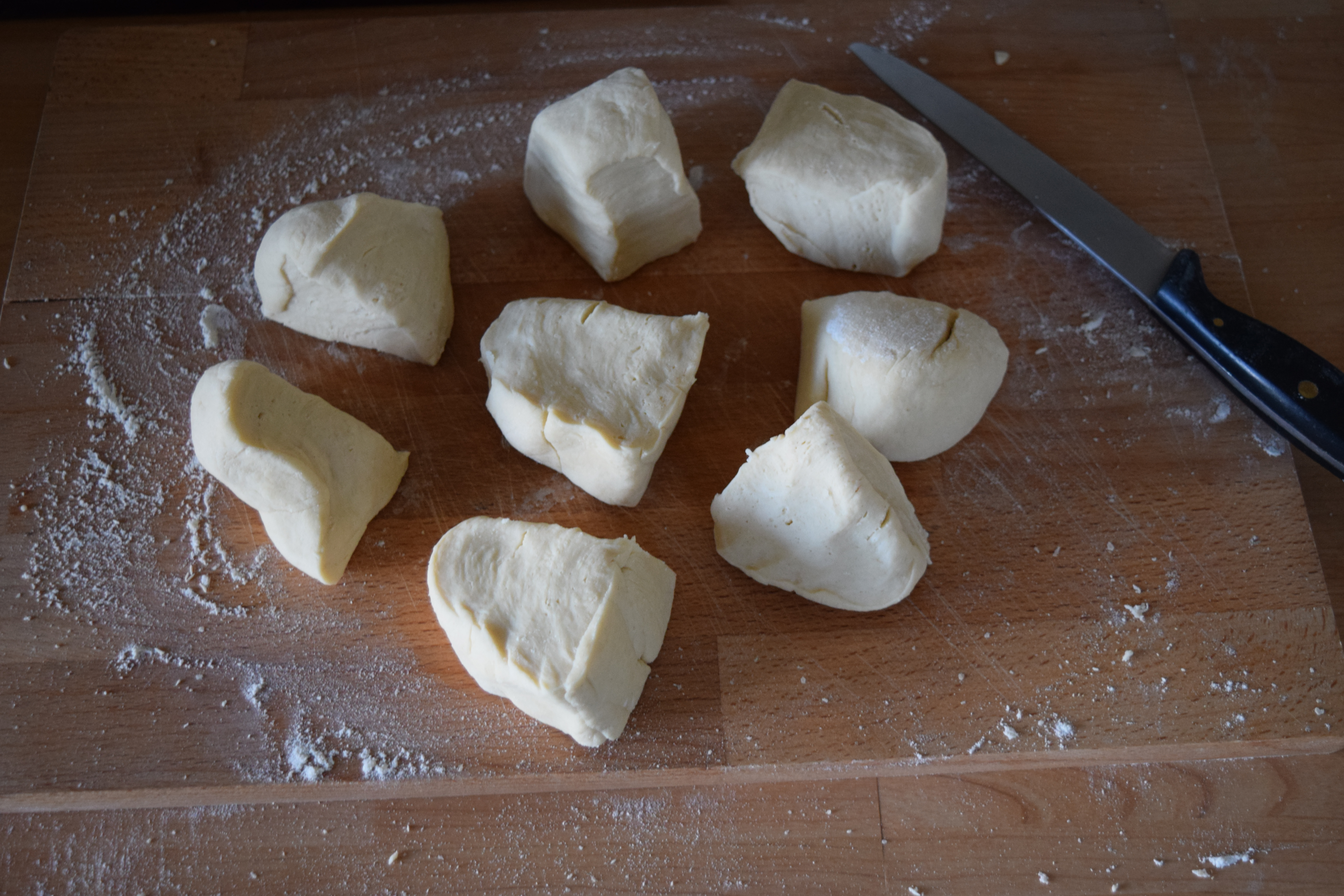
Knead the dough for 10 minutes – if it’s too sticky, add more flour, if it’s too firm, add splashes of milk and knead it in. There’s a lot of flexibility in this recipe because of the way the flatbreads are cooked, so don’t worry too much about precise quantities or measurements. Let it rise with a tea-towel over for half-an-hour in a warm spot, then cut it in to eight pieces.

DSC_0163

Roll each piece flat, to about 3mm thickness and whack them in an oven at 200°C. About 10 minutes later they’re done. Keep an eye on them so they don’t burn, just go a bit golden-brown on top.

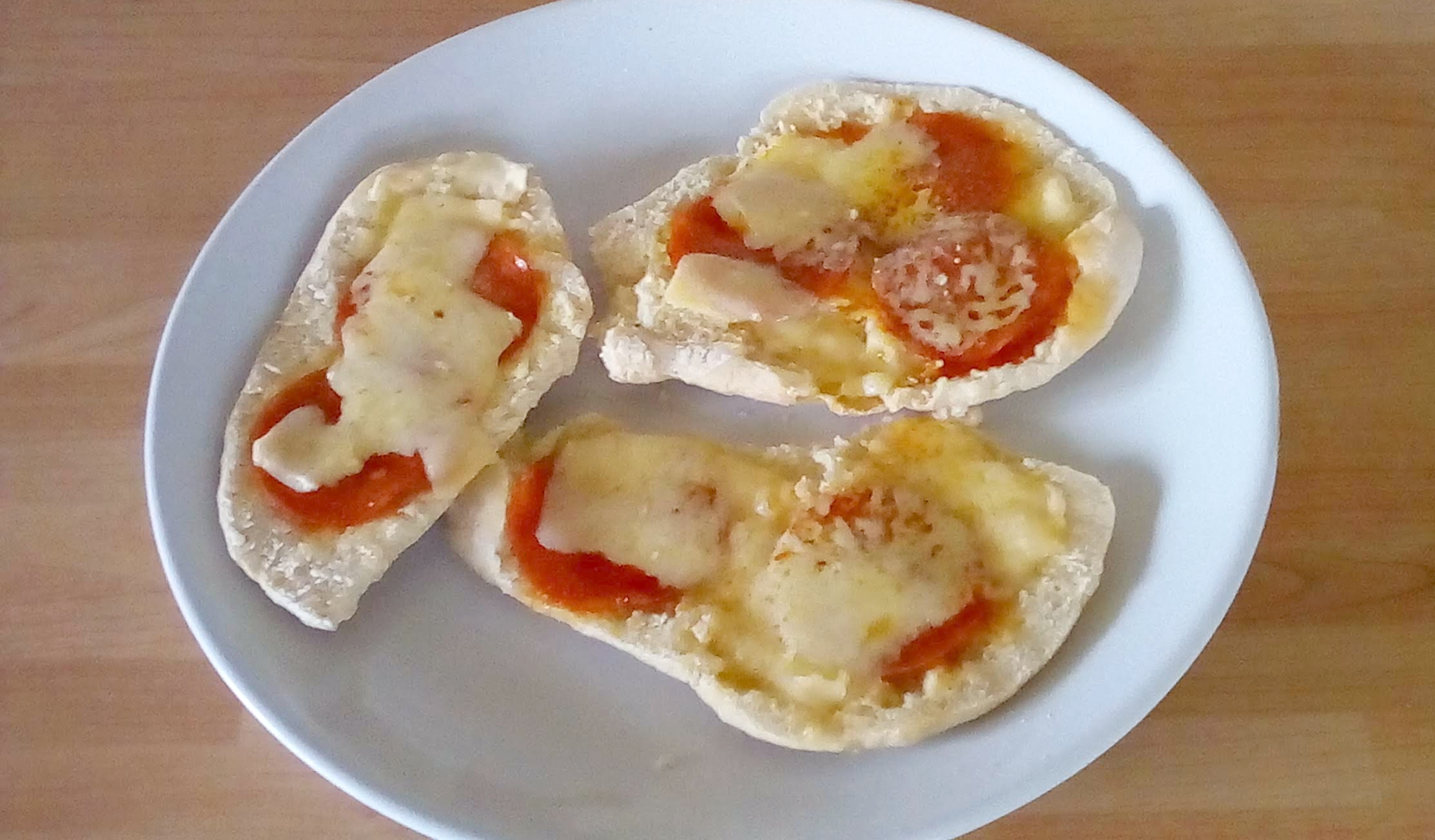
A couple split in half and turned into mini pizzas with a few Tesco salami slices and bit of cheese, with plus a cup of tea or coffee, makes a meal for 30p.

DSC_0164


Cooking on a Bootstrap – Basic White Loaf – 40p a loaf.

COOB - 1A.jpgBack to the real spirit of the blog: good food on a very tight budget. Obtained a copy of Jack Monroe’s new book, Cooking on a Bootstrap, and started with recipe no. 1: “basic white” bread. The recipe is as simple as one can get, even simpler and cheaper than my previous bread post.
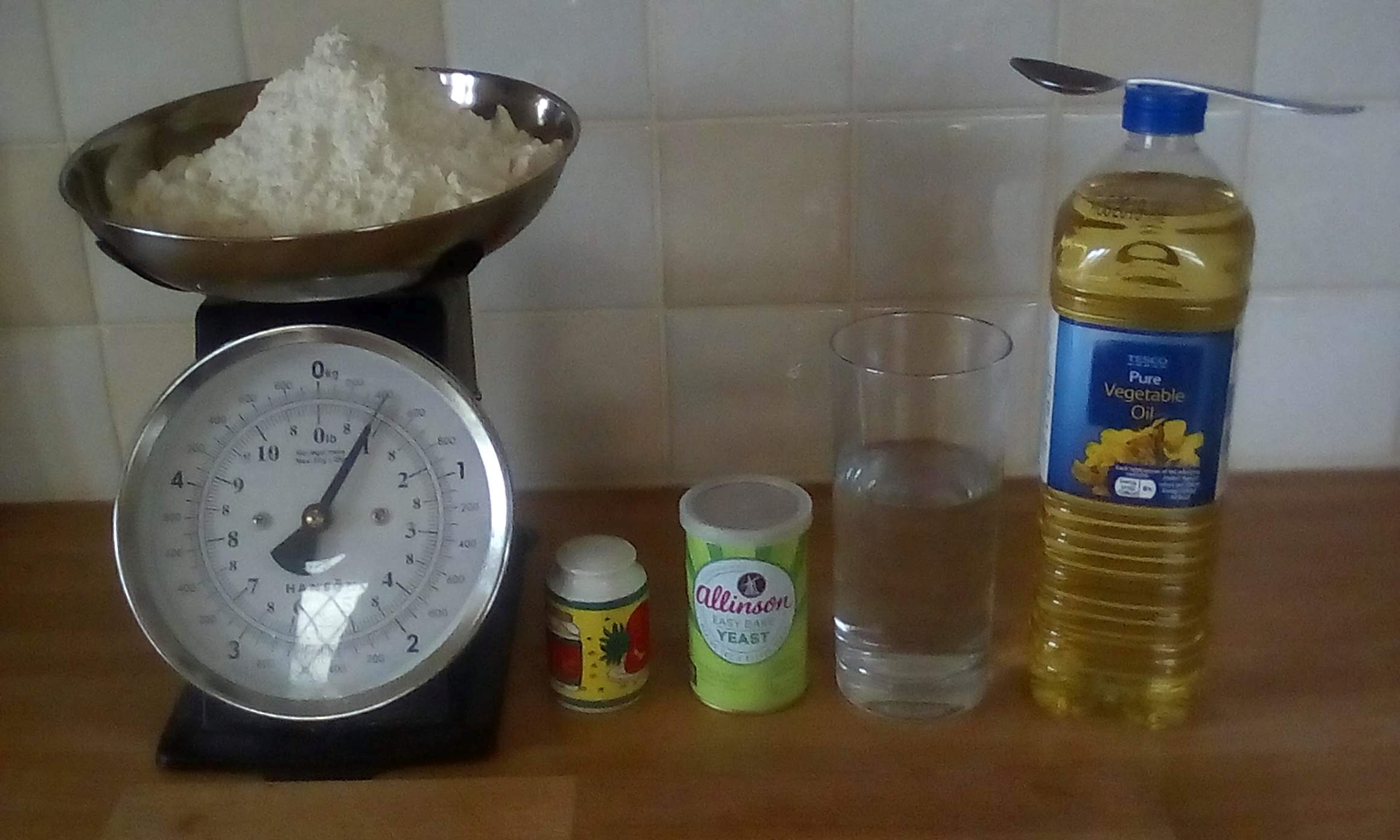

Cooking on a Bootstrap – Basic White Loaf

Ingredients:

  • 400 g plain white flour.
  • 1½ level teaspoons dried yeast.
  • Pinch of salt.
  • 250 ml warm water.
  • Teaspoon of oil.

What to do:

COOB - 1B.jpg

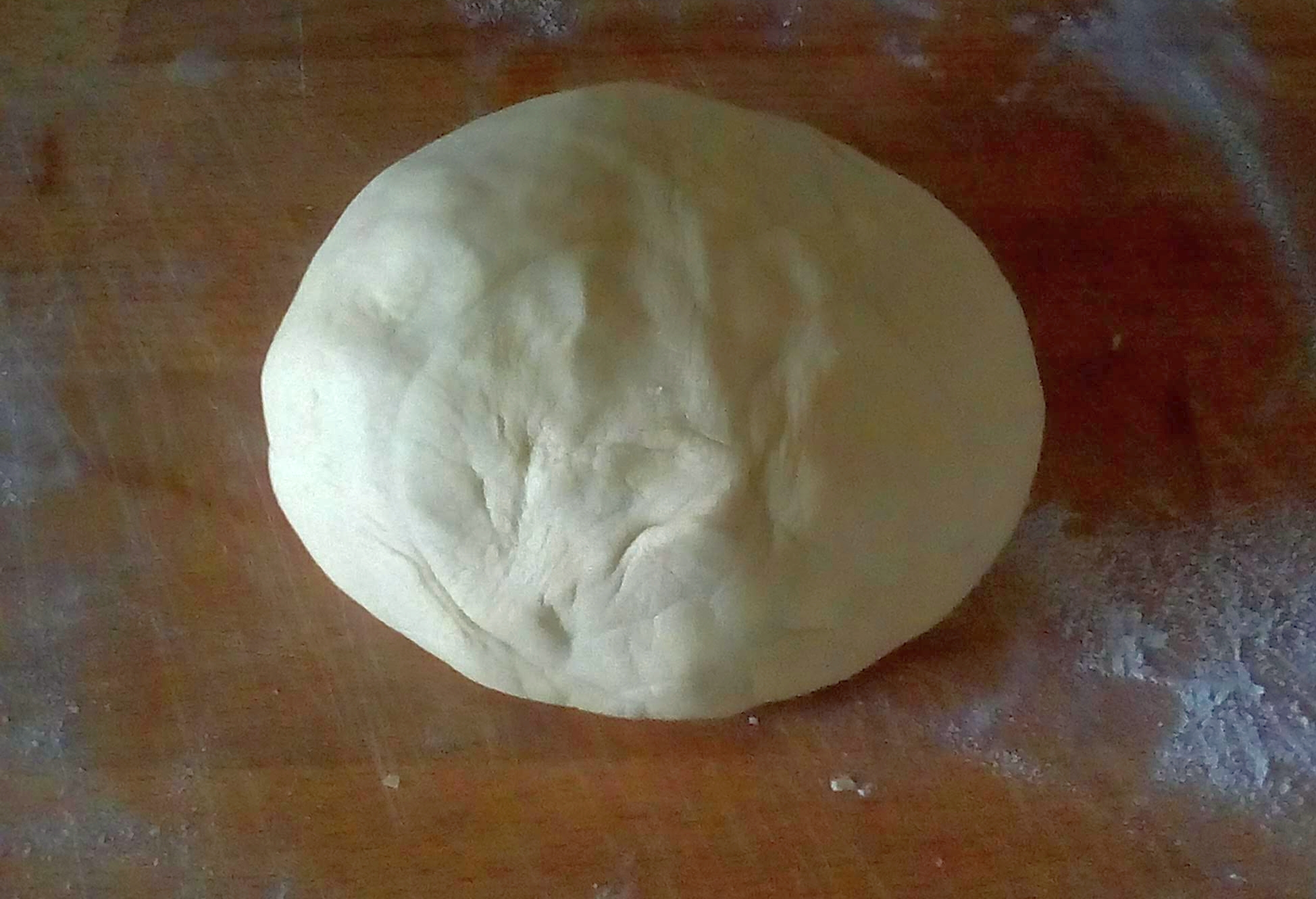
Mix the flour, year and salt together in a large mixing bowl. Add the water, stirring everything together to make a dough.

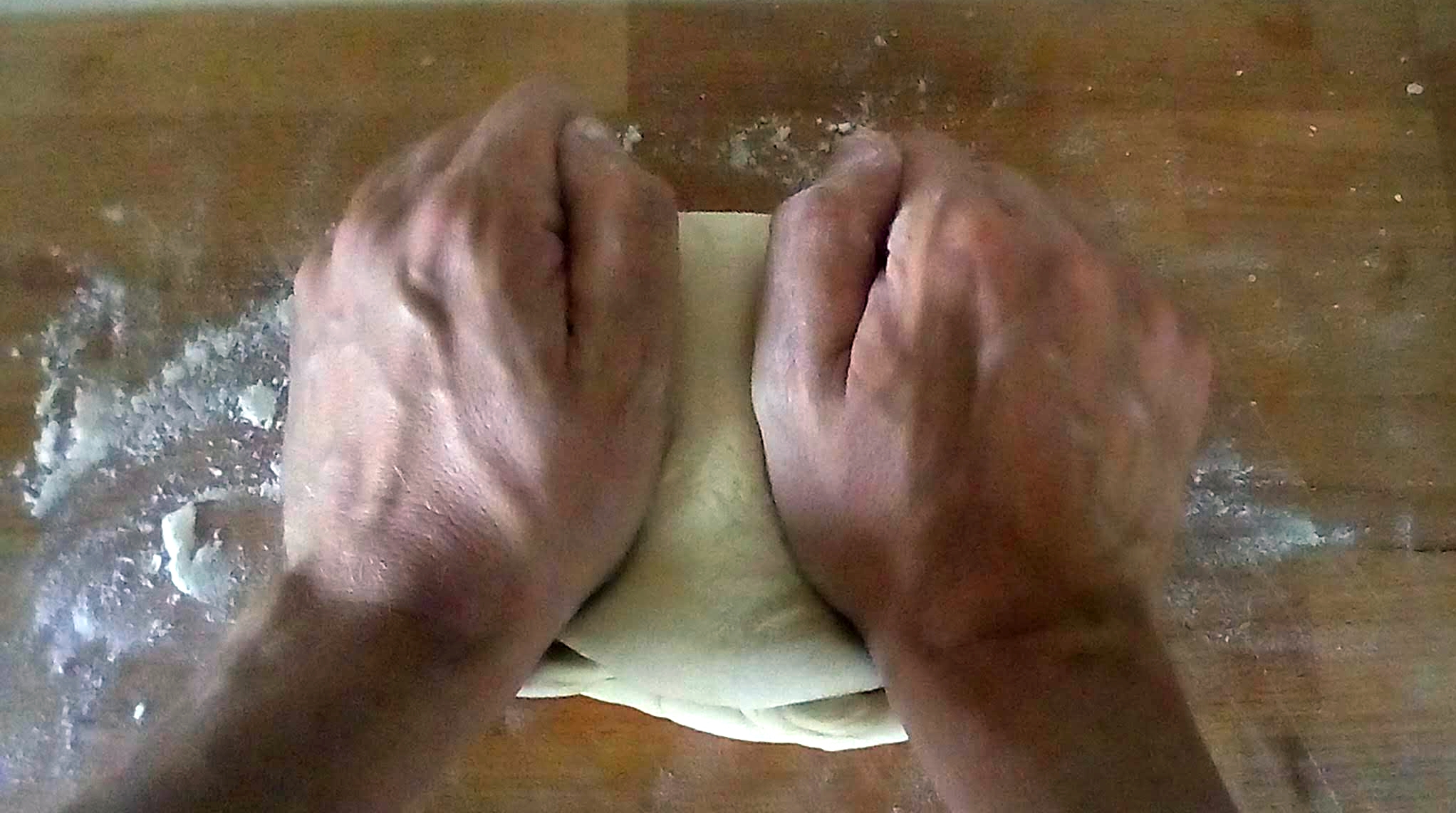
Knead the dough for 10 minutes. Jack suggests rubbing a teaspoon of oil onto the palms of your hands first, and it does work well, stopping the fresh dough sticking to you.

COON - 1C.jpg

Let the dough rise under a tea-towel for 1 hour, then into the over at 180°C for 40 minutes.

COOB - 1C2

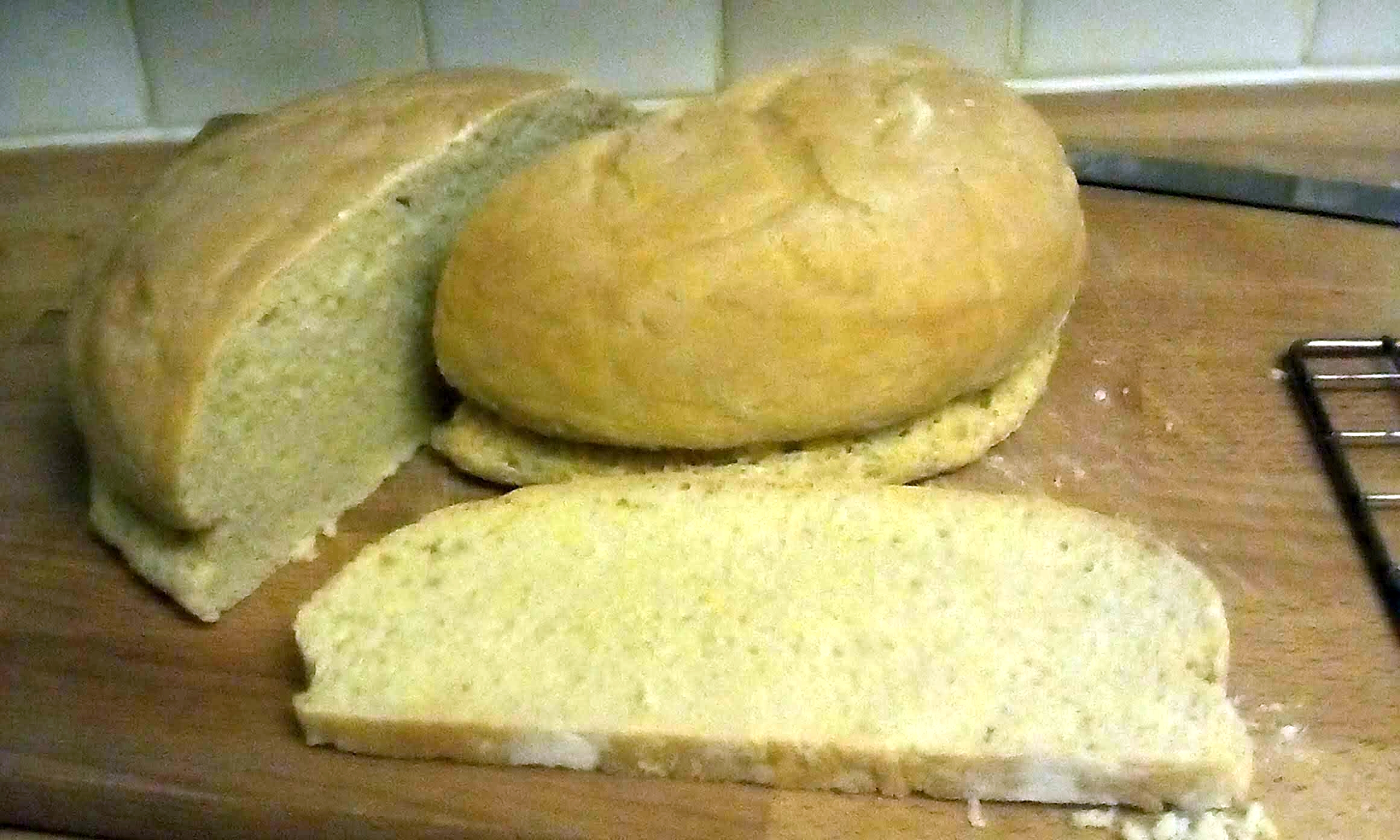
The result is an uncomplicated plain white loaf, which, including electricity and washing-up, cost about 40p a loaf using a mini-oven, or 4 pence per thick slice. (Baking it in a large, high wattage oven would, of course, raise the cost by 10p or more.)

COOB - 1D.jpg